As a rule, I don’t set New Year’s Resolutions, but occasionally a maxim to guide the year emerges.
This year’s maxim: The right way to do something is the easiest way.
This is primarily a statement against deferment. Deferred costs, deferred maintenance, deferred effort. Our instinct is to evaluate things based on their immediate cost and defer as many things as we can. Somehow our imaginations are very good at convincing ourselves we will be in a better position to do something later on. Most likely, you will not. In fact, you are most likely going to leave it until it absolutely must be done at an inopportune time. Let us call this the Untying Your Shoes fallacy.
How many times do you walk in the door of your home, kick off your shoes, and go about doing something else? It feels great to be home, we know this. But getting home is usually not as time-sensitive as leaving home for an appointment or work. Those are times when not having to untie your shoes before putting them on would be great. Coming home is leisurely. And yet, my tendency is to kick off my shoes and leave the untying to some future time when I’m hustling three tiny people with no sense of chairos or kronos out the door. Inopportune.
I think that this calculus is true for nearly every situation. Costs deferred now are paid for with interest later. Examples:
The last step of sharpening a tool ought to be wiping it down with oil. This drives water from the stones out and protects it from rusting. It is so much easier to take five seconds to wipe down a tool than it is to clean rust off later. And yet, it is very tempting to skip that last step to get back to work.
The same goes for when to sharpen. I have a bad habit of using a tool long after its edge is gone, which results in bad work that is hard to do. A sharp tool does good work easily, but you have to take three minutes to sharpen it. It will take longer to do a planing task badly with a dull iron than it will take to sharpen the iron and do the task well.
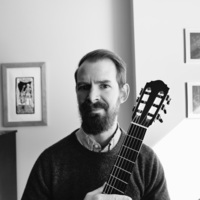
I have played the guitar long enough to be quite a good sight-reader. I can play most pieces at a reasonable level the first or second time through. This feels like incredibly fast progress, but it’s hiding a secret. When I’m sight-reading I am not absorbing the information of the piece in enough detail to continue making progress on it. It will sound about the same on the tenth play as it did on the first. Learning is not occuring. This is great if you need two hours of easy music for a gig, but concert prep is another matter.
The fastest way for me to learn a piece at concert-level is to work in tiny chunks, absolutely mastering each one at a glacially slow tempo, combining the chunks into sections and then bringing them up to tempo. When I practice like this, learning is rapid and assured even though the process seems slow. Unless you understand how our brains learn new motor programs you wouldn’t think practicing this way would work. As my undergrad teacher said all the time, “the slower you practice, the faster you progress.” The slow start is a fast finish, but a fast start never gets you there.
So this year, clean the kitchen before you go to bed, take out the trash before the bag is bursting, sweep the shop when you finish for the day not when you start tomorrow, clear out that inbox before heading home, change the oil on time. Untie your shoes when you take them off. You will pay these costs eventually, might as well pay them now.
This is the right way, and it is the easiest way. Maybe not the easiest way it could be done at this moment, but ultimately, it is the easiest way.