When I was about fourteen my mom put a cd in my Easter basket. This wasn’t uncommon, but this particular disk would become one of the more important ones in my collection. I’ve listened to it nearly every Holy Week since.
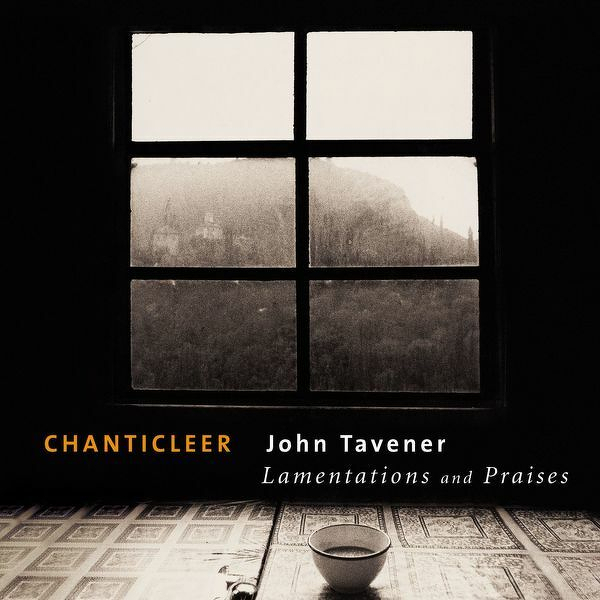
Other than already being a fan of both Chanticleer and Tavener, I had absolutely no context for this work. I just knew that I loved how it sounded. Chanticleer is somehow the best and most versatile choir around, and this caught them at what I consider their peak (when I saw them in concert around 2010 only one member of choir—the incredible and affable bass Eric Alatorre—that recorded this was still in the group. He spent about thirty years with them but has since retired from Chanticleer and sings with whatever choirs he wants.)
As it turns out, this work is an Orthodox liturgical work. I am not Orthodox myself, but it would be fair to say my aesthetic sensibilities fit a lot better in an Orthodox context than Protestantism.
Tavener was himself a convert to Orthodoxy for most of his adult life and this work was intended as service music for Pascha. He includes somewhat detailed program notes about the movements through the space in the program notes. It appears to have only been performed a few times, mostly by Chanticleer and once by (of all things) a Presbyterian church’s choir.
The choral numbers are predictably Tavener; rich harmony, homophonous textures. Unlike many Tavener works, most of the choral numbers are lightly accompanied by strings which adds to the depth of sound for such a small choir. It’s the solo singing that really stands out though. To a man, they all inhabit the expressive world of byzantine chant (quarter tones and all) in a way that is very unlike any kind of western singing, but completely convincing.
The final movement, Resurrection in Hades, features one of the great shocks in music. After over an hour of sparsely accompanied music, we hear what sounds like a board being hit with a hammer. And indeed, it is a semantron. This is such a foreign sound to eastern protestant or catholic ears, but it carries rich significance in the Russian Orthodox tradition as a traditional accompaniment to processions and funerals.
This is the only work I know with what I consider a satisfying musical depiction of the resurrection. I’ll just leave it at that.