Posts in "Blog"

Formats of Mediation

A recent post by @dwalbert about the proliferation of the phone-based vertical video format (and a vertical ways of noticing) got me thinking about musical mediation. One of my perennial preoccupations, as it turns out. This post suffers from a case of Too Long, but I’ve trimmed it as much as I can.

We have two primary ways of experiencing music: playing it and hearing it live. These are both embodied and direct. Player and listener are quite literally interface. We also have two mediated ways of encountering music: notation and recording. As formats of mediation, these are quite different and have very different results from one another.

The last time I taught my music technology class I asked this essay question on a quiz:

“Which technology do you think has had a greater impact on the development of music: notation or recording?”

I expected a variety of answers but was surprised at the veracity with which most students (10 out of 12) argued for notation. These were all young musicians undergoing classical music training so perhaps I shouldn’t have been surprised, but it did get me thinking about the different ways we relate to music through technology.

As a tool of preservation and communication notation is of enormous value. Without it, nearly every piece of music before about 1900 would be lost. At least we assume this. Without notation would the western tradition have continued as an oral tradition rather than a written one? Would violin teachers pass Bach partitas down to their students like sitar masters pass down ragas? Would they have subtly changed over the years the way folk songs do? Would there be Bach Partitas at all or would music have sounded utterly different in his day? I don’t know, but I am fascinated by these kinds of question. I would 100% read a book of speculative musicology (which should exist) imagining a European music tradition without notation.

For everyone who ever lived before c. 1900 (and many others since) the only music they ever experienced was played within ear shot. Thinking this way it’s easy to realize why Pa’s fiddle is so present in Laura Ingalls Wilder’s childhood memories and why music and religious ritual are so closely intertwined throughout the world.

Notation is not just a means of idea capture, it is also provides a model for compositional thought. Mozart had the inner ear to write complete pieces in his head before writing them down, perfect and complete, while Beethoven worked out his musical ideas on paper as he revised draft upon draft. The key here though is they were both translating sound to notation in their heads, Mozart at his desk and Beethoven walking around the countryside. (His typical day involved two hours of vigorous walking.) The notation was to communicate intent to the musicians, but also provided the frame of creative possibility. I’m fond of this definition of notation from Ferrucio Busoni, “Notation…is primarily an ingenious expedient for catching an inspiration, with the purpose of exploiting it later” (from Sketch of a New Esthetic of Music).

Another of my speculative questions is whether Mozart would have been such a prodigy in a different era. The classical style, with its homophonic texture and clear rhythms, is the style most well-suited to Western staff notation. It makes complete sense on the page, which is why it’s the music we give beginning music theory students to practice analysis. Mozart possessed a potent combination of aural imagination, creativity, and facility, but he was also born at the perfect time. Compared to later styles, which visibly strain against the limitations of staff notation (and eventually sought to break free of it altogether), Mozart’s music on the page is like a boat in the water drafting beautifully.

Stravinsky was the first composer I know of that bragged about composing at the piano. The complex sonorities of his music had to be worked out audibly since they didn’t follow an established vernacular. Historically though, composers hear the music then they write it down. Bach considered anyone who composed at the keyboard an amateur. Professionals do their thinking by ear.

This is why it seems obvious to me recording is a more impactful technology and has changed us as musicians much than notation. Notation is potential sound, recording is actual sound.

Think for a moment about the diversity of music you have heard in your life. Now think about the music you have heard live. One of my favorite composers is Arvo Pärt. I cannot recall ever hearing one of his works in a live concert (though I have played one!). Even the concert I attended at the actual Arvo Pärt Center in Estonia didn’t have a piece by Arvo Pärt. And yes, this felt just like going to church and not praying. There are dozens of composers whose works I know and admire for whom that is true. Recording has allowed us to become musical globalists in a way that notation could never have done. Compared to notation, recording is a populist technology giving access to an entire world of music. No skills required, just the equipment to play it.

Richard Taruskin points out in the introduction to his six-volume Oxford History of Western Music, that what we generally call “music history” is really the history of notated music plus a few bits of archeological evidence. At least until the 20th century. Now all other musical activities can be recorded, preserved, and studied. The earliest ethnomusicologists developed arcane notation systems to capture the idiosyncrasies of folk musicians’ individual performance. A generation later they could just record them.

This is the place where the “Why I Am Not Going to Buy a Computer” quote usually falls, but I’m not going to. Recording has enriched my life more than almost anything else. (And I bet Wendell has a hi-fi somewhere on that farm). If I had to choose it or notation I wouldn’t have to think two seconds. I am extremely good at reading music, but I can learn the music I want to play by ear if I have to. I cannot hear the music of the world except through recordings.

I will point out some ill effects though, perhaps analog to David’s original point about ways of seeing. Recording has had profound effects on our expectations of music. Most notably in our standard of perfectionism. I see this in my students frequently. If your main exposure to music is through studio-edited recordings that simulate perfect performance then you can have a falsely elevated standard for how good a live performance needs to be. Just like we think there are actually people who look like the instagram-famous with their clever poses, cosmetic surgery, and camera filters, we think musicians actually sound like this in real-life. They don’t. Striving for this standard leads the most dedicated students to practice to the point of injury and psychological torment over their mistakes.

Nearly every music student has had the experience of performing a recital that goes well and is well-received. Everyone (genuinely) says how nice it was, and you feel great. Then you get your recording back and eagerly listen only to hear mistake after mistake. Mistakes that nobody noticed in the live performance and didn’t detract from its effectiveness in the least sound like a pimple on your nose in a photo. Unnoticed in real life, absolutely glaring on record.

However much you might love recordings, we all know that the experience of person-to-person music-making is the real item. At least for those of us who still listen to live music. It seems some of us are so used to hearing pristine, auto-tuned, doctored vocals that hearing a real singer can be a letdown. Like the virtual porn-addled college student who has lost his desire for real people, we can lose sight of the beauty of unmediated musical experience. However much I may admire Glenn Gould, his animosity toward audiences and performing should be seen as an early harbinger of this pathology. In Adam Neely’s sharp video on AI generated music he includes results from his informal survey of Suno users. One of his questions is which AI generated music they consider influential on their own music. The responses were primarily bafflement. Why would I listen to someone else’s AI generated music? I listen to my own!

Music-making, ideally an instrumental activity extending and enriching our humanity, can become another device. Removed from the need for cultivation, discovery, experience, and sharing, one of the most humanizing of all activities, playing and listening to music, enters the goon cave.

Friction is the Thing

A few vignettes, then the point:


When I was an impressionable young musician, I attended a masterclass with Angel Romero (one of the famous Romero family of guitarists). He was drilling a very short passage with a technically accomplished guitarist who was getting bored trying to pull off a phrasing idea. The student finally complained, “It’s just five notes…”

Maestro Romero promptly threw him out of the masterclass and left to get a coffee.


In my grad school days when writing papers was a significant part of my life, I used to work on papers for weeks before writing them. This involved a lot of reading, score study, note taking, and thinking about stuff on the bus or while walking around Baltimore. Usually the night before it was due I would sit down and write the thing start to finish, then edit early the next morning before turning it in. (This process caused my wife great distress. Much like Donald Draper napping on the office couch, it was impossible to tell if I was working or not most of this time).

The majority of the work was figuring out what I wanted to say. How to say it was the final stage. Saying it with some level of style took up the smallest amount of time.


In an interview, microtonal pop musician Maddie Ashman says, “When you have to program every note of a song individually you really think about if it is the exact right note at the right time or if it should be left out.”

This is a great observation made necessary by a stupid music culture. Imagine a composer from the 18th century commenting on how labor intensive it is to choose all those notes. The writer who must find all those words for each sentence. The painter mixing colors. The horror! (Maddie’s music is actually very interesting, though likely not everyone’s taste).


My kids were recently watching this animated version of The Very Hungry Caterpillar. While the animation is lovely, what struck me was the incredible quality of the music. Someone wrote and orchestrated a beautiful piece and then a whole orchestra of live humans (who got paid) with a conductor (who got paid even more) sat down to record it in a studio. For a six minute cartoon. When this was the only way to do it, it was normal.


Edited to add another:

I’ve been wrangling versions of this post for weeks and couldn’t get it to work. It was up to over 1000 words of the kinds of thing you read everywhere about AI. It had a tortured aside about Sturgeon’s Law. It was terrible.

After giving it another go this morning, it all clarified in a single moment. The stories were the post. They say everything I was trying to say on their own. It took a lot of friction to get there.


This is my post about AI. Let the reader understand.

Matters of Interpretation

Following up from yesterday’s post about interpretation: I taught on the subject in a recent class. I gave a few examples, one musical and one dramatic, to demonstrate what we (the interpreter) bring to the texts we present in performance.

The first was maybe obvious, but makes the point exceedingly well. Glenn Gould playing Variation I from the Goldberg Variations (1955 recording) and Glenn Gould playing Variation I from the Goldberg Variations (1981 recording).

1955:

1981:

One student didn’t even pick up that these were the same pieces (she admitted she was distracted by what she thought was a typo on the slides when I put the same performer and piece information up twice). Other students chuckled or nodded knowingly as I started the second recording. Such wildly different readings by the same person. We discussed what the elder Gould was attempting to show about the music that young Gould was not, and vice versa. As we listened a bit more, it seemed that students started to come around to the 1981 when they initially thought it was a bit goofy. (Gratifying, I’m a pretty devout 1981 recording fan).

The point is: they are wildly different and everything that sounds differently is a matter of interpretation.

My second example is a bit different. I used Speechify to create a reading of To be, or not to be. I used the “British English - dramatic” voice. Here’s how it sounds:

I’ll be honest, it’s better than I expected it to be. (And significantly better than it was in the first version of this lecture I prepared two years ago). It observes punctuation, leaves space, and has a pretty convincing cadence. It is, in other words, correct. Though it pains me to say, it’s as good or better than many actors I’ve heard on the stage. But it isn’t interpretive.

We then listened to the Andrew Scott version:

Let’s just say, the hush in the room made it clear the point was thoroughly made.

Literacy, Improvisation, & Interpretation

A year or two ago I read an old scholarly book that (while certainly past its prime) gave me some interesting things to think about in relation to music. As a teacher of ear training, I’m fascinated the effect musical literacy (both learning music from scores, and the culture surrounding notated music) has on our conception of music, how we listen to it, how we learn it, and how we remember it.

Walter Ong’s Orality and LIteracy: The Technology of the Word, is a classic text that summarizes the developments orality studies made in the 20th century (published in 1982, most of his sources were written from 1960 on after significant field research occurred in the first half of the century). Ong cites studies on Yugoslavian epic poets who very purposefully avoided learning to read because they instinctively knew that it would diminish their memory and ability to perform their poems.

According to Ong though, large-scale epic poetry is decidedly not memorized verbatim. The oral poet is employing a very different process than the English school boy compelled to recite Lord Byron line by line (if they still do this, it’s been a while since Goodbye, Mr. Chips I suppose). The oral poets internalize the shape of the story, and employ a vast library of tropes and set pieces to convey it, in effect making the story in each telling. The set pieces are in the correct meter, and they have collections of phrases that will complete a line when needed to maintain the metrical feel. They have a functional library of poetic devices and phrases that are extemporized in new combinations for each telling.

When asked, the poets themselves say that they tell the stories “the same way” each time, though comparing recordings of different events shows there are often significant differences. The concept of a “verbatim” retelling is foreign to a mind that does not interact with texts in their rigid fixity. They do indeed use the same lines to tell the same story, which is what they mean when they insist that each performance is the same, but the particular order and combination of lines varies from performance to performance. Oral recitation is a social interaction between audience and speaker. The environment and give-and-take shape how the story is told in each instance.

That is to say, the poets are playing jazz.

A tune from The Real Book has a general melody, chord progression, and structure (although the classically trained students in my improvisation class found it very difficult to grasp a lot of standard melodies since the performers ornament them so much). Each realization of it, however, is unique because solos are improvised, and comping is a subtle art of reacting to the soloist. In my (very limited) experience of playing standards, the better I know the song, the more differently I will play it each time. If I know the changes well enough to inhabit them there is greater freedom of exploration and creativity rather than just trying to remember what comes next. Add an audience to the mix, and there is a matrix of influences that combine to create that one moment of musical time, never to be repeated. But of course it was just Autumn Leaves. Saying we played Autumn Leaves though is such a different thing than saying I performed the D Minor Partita by Bach. This is why “music” is such a difficult thing to talk about, it comes in so many forms and practices.

This experience of spontaneous creativity is the most compelling aspect of improvisation. Christopher Berg (my wonderful undergrad teacher) spoke of classical performance as a “rehearsed improvisation.” He loved the experience of being on stage and being able to incorporate fresh ideas into the performance. A good concert hall filled with an attentive audience is an inspiring thing. The ability to respond to that can breathe life into a performance. And it should! The connection with the audience is the point of the whole thing.

Improvisation has been systematically eliminated from the education of classical musicians. Until somewhat recently every musician was also a composer and improviser. It was just part of their training. Philip Glass describes one of Nadia Boulanger’s part-writing exercises in Words Without Music. Three students would participate. M. Boulanger would play a melody. The first student would sing a bass line that followed all part-writing rules against the melody (from memory and by ear, mind you). The second would sing a tenor line that accompanied both soprano and bass. The third would have to remember each line and supply an alto line that would not conflict with any of the extemporized parts. This is striking (and a story worth telling in a memoir) because it is so unusual in 20th century theory pedagogy.

Concerto cadenzas originated as a fermata left by the composer to indicate that is where the soloist would improvise (or compose) their own cadenza. Now in those concertos without composer-supplied cadenzas there are “traditional” cadenzas written by someone else and codified into the score, given a shelf in what Nicholas Cook calls the “musical museum”.

The cult of genius is at least partly to blame here. Since Beethoven and the Romantic era there has been an elevation of the few “geniuses” whose muse could break through everyday composition and give us these special musical revelations that deserve being enshrined in the canon forever. (Despite the fact that there is significant unevenness of quality in that canon). Why would I piddle around with improvising (much less composing) when I could be learning Beethoven instead?

The performer in this framework is essentially a messenger, delivering, intact, the vision of someone else. To borrow from Nicholas Cook again, classical musicians don’t give us their own music, it is a “performance of” the piece. Did you hear Barenboim’s performance of the Beethoven Sonatas? Barenboim has nothing to say, except as an authoritative channel for Beethoven’s genius.

For orchestral players (highly trained, sensitive artists in their own right) the situation is even worse. Not only are they serfs to the Great Composers, they must deliver them according to the desires of the conductor who, if he is established enough (and it is generally he), is heralded a sub-genius who has seen through the fog to the true inspiration within the music handed down from the first-level genius whose golden pen delivered these notes to us.

This is why so much of our classical musical training is spent ensuring accurate execution of the written score. Now, I appreciate a nice clean performance as much as the next person (probably a lot more actually), but if that is all you do it really stunts your creativity. The closely controlled structures of classical music provide a wonderful framework for creativity. When you know your way through a piece the interpretive decisions made in a compelling performance can be bracing. To do this though, you must get past the realm of notes and into the world of sound. This is what I want my students to do, see through the score to a world of imaginative hearing and listening where we can find “what the sound wants to do,” to quote my other great teacher (Julian Gray).

If there is a genius to works in the canon (skeptical though I am of the concept, I am fairly dedicated to much of the canonical repertoire), it is in how they can be interpreted and delivered in a meaningful way. This role of interpretation must be held up as the highest form of musical achievement for classical musicians, much like the great masters of jazz are the improvisers.

Music That Made Me: Gorecki String Quartet No. 3

After the explanation and introduction, on to the albums:

The influence my older brothers had (I have three of them 4-, 11-, and 15-years older) on my musical tastes cannot be overstated (we did our best on the youngest but I understand he mostly listens to lo-fi beats and dubstep [this is a joke {mostly}]). What thirteen-year-old is banging away to Philip Glass’s North Star or sitting through the long version of Gavin Bryars’s Jesus Blood Never Failed Me Yet? You don’t find these things on your own, especially when you don’t have internet access and you’re still looking for Great Illustrated Classics on visits to the library.

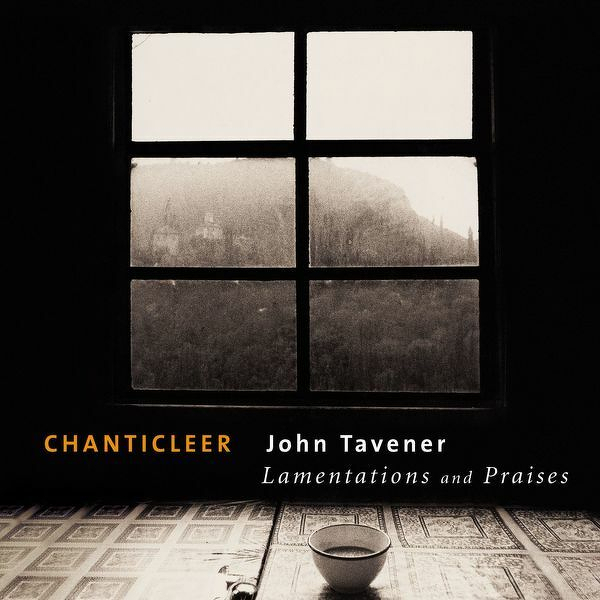
A lesson I learned from them early on is that interesting music tends to be found in a few reliable places. Nonesuch, ECM New Series, Argo, and Bis were the labels to look for. Another of these trusted sources is the Kronos Quartet. A Kronos record will always be interesting, some will change your life.

Much of the great quartet music of the last fifty years is thanks to their commissioning work, and the three string quartets of the Polish composer Henryk Gorecki are no exception. Of the many Kronos recordings I adore, String Quartet No.3 “…songs are sung” is probably my favorite. I listened to over and over again after it was released in 2005.

Gorecki’s career follows a trajectory somewhat common for composers born in the early 20th century. An upbringing in formal music education meant an expectation of learning and composing serialism. Once established he turned toward a quasi-tonal style influenced by pre-classical music. This later style (and his return to writing liturgical works) means he is often compared to Arvo Pärt and John Tavener, but his style is his own.

Though his career follows a familiar trajectory, it has one unusual characteristic: a massive hit recording with his Symphony No. 3. It has sold over a million copies, a ridiculous number for a contemporary classical CD. Remarkably, his composing style does not seem to have responded to fame and that remains his only widely known work. (My own first encounter with Symphony 3 work was on a trip to Phoenix of all places. I bought a used copy in a book & record shop. Back at the hotel that night I synced it to my iPod and listened to it straight through lying on the floor of the hotel room while everyone else was asleep).

All three quartets are works of melancholy, and even anguish, but very different projects structurally. The first is a single long movement following the model of Shostakovich’s 13th. The second is a four movement classical quartet in a highly dissonant sonority. The third (Op. 69) is on a massive scale lasting almost 50 minutes. Of its five movements only the third is at a faster tempo (and not that fast). The other four are slow, dissonant, mournful but not harsh, and with a distinct progression toward hopefulness in the last two movements.

The quartet (following an innovation of Bartok) is in a symmetrical arch form. Symmetry and balance are the preoccupying structural features. The four slow movements are each almost exactly ten minutes long, with the middle movement lasting five. Each movement has distinct sections that mirror one another. The central movement inverts the form of the work as a whole with a central slower section (introducing some of the first unambiguously major key material) surrounded by the agitated counterpoint of the outer sections. There’s something of a dialectic from minor key dissonance toward major key consonance broken by the activity of this middle movement. This large scale movement continues until the final chords which resolve with a flat 6 suspension reminding us of the minor key beginning of the piece before settling into a long, low-voiced major chord.

Kronos plays with a sustained intensity that never flags but also never overflows the banks of Gorecki’s introspective restraint. They are known for not over-polishing their sound with vibrato, and that effect gives a raw expressiveness to the melodies.

This is decidedly inward-focused music. It is a commitment, but repeated listenings reveal a work of psychological depth. It is one of many expressive touchstones I return to again and again.

If there is one lesson this album taught me, it is that music can go straight to your heart in a way nothing else can. A serious lesson to learn when you’re fourteen.

The Music That Made Me

A project of personal musical formation.

One of the books I’ve most enjoyed reading the last few years was Brad Mehldau’s Formation: Building a Personal Canon Part I (I eagerly await the publication of Part 2). It is a remarkable memoir that weaves together his own life story up through his 20s with the experiences of music that formed him into the musician he is. With incredible forthrightness he chronicles the bullying of his childhood, the sexual assault he experienced at the hands of his high school principal, the many years of coming to grips with this through risky sexual activity, then his descent into a heroin addiction that dominated his 20s. It is not an easy read, but he manages all of this without being prurient or self-pitying.

Throughout he writes beautifully and insightfully about experiencing music from his earliest memories to playing in NYC clubs as an emerging force in the modern jazz scene.

Reading it has helped me reflect on my own musical formation a bit. The most influential forces in my life as a musician have been albums that captured my attention and drew me into their world over and over again, making irresistible the draw to make a life in music. Most of these were recordings, many were scores I played, and a very few were live performances. By far the larger part were recordings. This project is a look back at some of the albums that were most important to me as I grew up.

Part I: Introduction, A Life of Listening

I believe there have been two great historical declensions in Western music: before and after the development of notation and before and after the invention of recording. Of these two, I would argue that recording is a much more impactful invention. If nothing else, it has had a broader impact since it is not just a technology for composers and performers but for everyone who enjoys music.

For someone who grew up relatively far away from the centers of culture, recordings were the key to my musical formation. I started listening to music before the iPod, so CDs were my first way into music. With limited access to the internet (and too many scruples for piracy), a BMG membership was my portal to the world of sound. The hours I spent agonizing over what albums I would choose for my monthly $6.99 cd, or a 12 for $3.99 each deal. The chores I did so that I had the money to spend on these!

Christmas of 2007 brought me the 30GB iPod Video. This didn’t change my relationship to CDs as much as make them much more portable. From this point on I was listening to music all the time. There is some music I purchased digitally (before the Starbucks gift card was a standard small gift the iTunes gift card was preeminent), but the music I really absorbed almost all came to me on CDs, which I ripped to my computer, organized and labelled (the earliest iTunes couldn’t download track information, you had to sit there with the jewel case or liner notes and type in each track!), and synced to my iPod. This syncing of course required a cord, because the iPod video could not access the internet. This was a ritual of near religious importance to me.

I had it in white. It shipped with the worst headphones ever devised.

In my teenage years I was generally either playing basketball, playing the guitar, or listening to music while doing something else. An enormous advantage of being homeschooled was that I had music going basically all the time while doing schoolwork. It also meant I could do my school work quickly and leave more time for basketball and music. Even with that extra time, I was most often practicing from about 10PM-12 or 1AM. This was partly personal preference and partly that during sports seasons the days were just very full.

This was also before any kind of streaming service was available, so the music you had available to listen to was owned or borrowed. Our tiny public library had a remarkably good selection of contemporary classical records curated by one of the libarians who had very hip tastes (nearly a whole shelf of Argo, Bis, Nonesuch, and ECM New Series recordings). In a full circle moment, a few Christmases ago I was visiting and took my kids to the library to play in the children’s area (it was freezing cold outside). By the entrance was a table of CDs being given away for free. Gavin Bryars, Michael Torke, Alfred Scnittke, many of the same CDs I checked out as a high schooler were there with date stamps in the mid-2000s as the last time they circulated. That is to say, before they became part of my permanent collection I (or one of my brothers) was the last person the check them out.

So whenever the mood strikes me, I’m going to go to my record/CD cabinet and pull out something that was a huge deal to me as a kid and write a bit about it. I don’t have a list, I’m just going to follow my gut and my ear.

Nathaniel Hawthorne's BS Job in The Custom-House

In the opening autobiographical sketch of The Scarlet Letter, Nathaniel Hawthorne details the years he served as Surveyor of the Salem Custom-House, a political appointment he held for three years. It could have been a cushy gig for the rest of his career if he played his cards right, but he was soon removed after angering the wrong people in a new administration.

The conceit of this sketch is that the outline of the novel (and indeed the artifact of the scarlet letter itself) came to him in a bundle of papers found in what amounted to the Custom-House archives. In the unfinished attic there were bundles of papers from the years of invoices, manifests, and shipping lists that were processed by the officials there. Hawthorne is aware that his port is past its prime - the heaps of papers are evidence of a once bustling trade done in Salem that has since moved on to other ports of entry closer to the growing cities. He is indeed one of the only young men who works in the Custom House. Most of his colleagues (who he senses have a mild resentment at his being their superior) spent their vigorous years at sea as captains or mates. They’ve seen magnificent port cities abroad and ridden forty foot swells. Now though, they live with sedentary bodies and their minds must feast on the past for nourishment.

This sense of boredom in a boring job is a blessing and a curse. Hawthorne is aware of the generous compensation for the amount of work required. An endnote gives his official daily responsibilities as 3.5 hours of work (almost shocking to our 9-5 culture) but we sense it doesn’t even fill these scanty hours. His retrospect seems torn between the ease of what was essentially a sinecure and his now having to hustle about writing and selling stories to make a living.

His unease with the whole situation is displayed in his unflattering portrait of his predecessors at the helm of the Custom House. He has much to say about their personal faults and lack of character. While the retired sea captains at least have a life of hard going sea work behind them to bolster their image, the previous surveyor was only a glutton. His God was his belly and nothing else.

His love for food is such that when not actually eating his only available topic of conversation is recollections of past meals. He recounts in vivid detail the smallest morsels that pleased his palate in meals past as if he is savoring them once again. Everyone here might live in the past, but at least the seamen have a past worth speaking of. They have done real work, even if now they just shepherd papers from ship’s clerks to their resting place in the attic.

Perhaps it is this aura of nostalgia (and his more than average interest in the written word) that piques the younger Surveyor’s interest in the piles of papers unceremoniously housed in the garrett. Sifting through them leads only to dismay, however. They are nothing but the effluence of a functionary office. The literal pro forma detritus of an administrative state he is now a small part of.

He recognizes that perhaps the records are of some historical interest (how many hogshead of sugar passed the docks of Salem in a given year) as a record of human activity, but that as a matter of human creativity they are utterly dull. Reading them, he understands that the enterprise of the Custom House and his post contribute nothing to his personal development.

His depictions of his colleagues past and present at first seems snarky and even cruel, but really they are motivated by fear. Fear that he will become one of these functionaries in the mechanics of commerce, which to him is a diminishment of his humanity. All the while, he struggles with his desire for a secure income in an undemanding job (remember, dear reader, 3.5 hours a day!).

This illustrates why the discovery of a scrap of narrative and a handmade artifact are so arresting. What could this human accessory, and one we later learn is beautifully wrought, be doing in an archive otherwise devoid of human interest? Why would such a thing be saved, and in the Custom House of all places?

Discovering the narrative outline accompanying it sets his imagination moving. The fragment isn’t enough to understand the full story, but it sketches a bare outline. Just enough for him to begin to glimpse the shape of it and to start giving it full form. Hawthorne’s true passion as a writer of stories is instantly rekindled and he cannot stop considering this story. His obsession increases as he tries to fill in the details and make a complete tale out of it.

He quickly finds challenges. Fleshing out (or “bodying forth” in one of Malcolm Guite’s favorite phrases) the story while working the tedium of his functionary job in an unfunctioning port has stunted his ability to create. The details are dim, the narrative arc does not come easily. Though he takes his usual long walks and sits at his desk he finds his mind dulled and resistant to imaginative work.

He senses that his hours in the Custom House are diminishing his formerly prodigious technique. Gracefully, he doesn’t have to find the wherewithal to resign his post, the incoming administration does it for him (he was also less than able at politics it seems).

After returning to civilian life his mental acuity returns only gradually. Through walking, reading, and attempts at writing (and now with the urgency of bills due) he slowly reignites his imagination until he can finally give form to the novel that follows.

In a 2015 book, David Graber proposed the concept of Bullshit Jobs (if one were to coin a less vulgar term I would appreciate it). I have not read the book (I suspect it is a book length blog post) but the idea is that our corporatized work-world has room for many workers who essentially do nothing of significance. Mere functionaries to organizational custom, machination, and short-term problem solving. Some of these are “email jobs,” which consist primarily of answering questions or providing information that could be answered in some other way, but it’s convenient for someone to just email you. Many are related to appearances or exist purely for redundancy. Even more onerous are the myriad jobs related only to managing compliance and liability.

During the covid shutdown there were a number of people who confessed (via anonymous accounts of course) that they did essentially no work for their full-time remote jobs. A reddit thread collected stories of those fully “employed” who talked about what they did all day. Log in, read blogs, watch YouTube. Whatever they want, as long as they could be contacted by a superior in the rare even they were assigned a task. One related that after having about 3 hours worth of work per day for a year, he was promoted to lead a team of himself and two other “workers.” He was not assigned any more tasks, so he did one hour of work himself and delegated the others to each of his “reports” (as the corporates love to call persons below them on the status ladder). As long as they kept their mouths shut, he admonished, they could all have a great life. Pick up some hobbies, enjoy the days, or even get another full-time job and double your income.

Though a few centuries early to the conversation, Hawthorne is describing his time in a BS job. The inclusion of this long, seemingly unrelated essay as formatter to one of the greatest novels is unusual. The essay is about the personal effects he suffered from taking one of these jobs. What does Hawthorne’s personal struggle with creativity have to do with the story that follows?

One of the themes of The Scarlet Letter is how we know others and who they really are. Surface-level judgement leads to the harsh treatment of Hester, who bears the undeniable outward sign of her sin and thus the outward branding of it as well, while Dimmesdale is able to manage his image to the townspeople to maintain approbation. His true character must be revealed by supernatural intervention.

Hawthorne hints at this theme in The Custom-House:

But, as thoughts are frozen and utterance benumbed, unless the speaker stand in some true relation with his audience, it may be pardonable to imagine that a friend, a kind and apprehensive, though not the closest friend, is listening to our talk; and then, a native reserve being thawed by this genial consciousness, we may prate of the circumstances that lie around us, and even of ourself, but still keep the inmost Me behind its veil.

The quality of relationship we have with others determines the amount of ourselves we reveal. Hawthorne held his dusty old coworkers with some flavor of contempt, as indeed he held himself in this position as well. He felt like his inner life was struggling, but his relationships to those around him were also flawed. The circumstances of their relationship meant its quality would be poor.

Imagine the kind of relationships someone doing a remote email job has with her colleagues. Having never met any of them in person, primarily interacting through screen-based text, and avoiding actual work and interaction at all costs. And some admit to only doing this an hour or two a day. Can this even be called a relationship? Nothing of the self is revealed in this work, and it is the revelation of the self to others that we need for a flourishing life. This of course is best done in family and convivial settings, but having divorced our working life from all meaningful relationships must leave us with an impoverishment impossible even for Hawthorne to imagine. Maybe one of the reports to whom you send delegatory emails used to be a ship’s captain on the high seas. How would you even know?

This plays out in the book as well. Dimmesdale’s public relationship with the people of Massachusetts Bay means that his true self cannot be revealed without destroying his life and calling. Hidden sin, and therefore disrupted relationships, dominates his life. It is only in the secrecy of the forest and in the relief of confession that we ever hear from the real Arthur Dimmesdale. His job, though itself a noble calling, is rendered a BS job because of his unfitness for it by his inability to reveal himself to others. The plot to flee Massachusetts Bay and start a new life elsewhere would be destined to fail because he brings this secret with him wherever he goes.

Chillingworth’s secret identity (spoiler: he is Hester’s husband) places him permanently as an outsider. He hides himself behind his status as an alchemist, work regarded with suspicion, to make concealing his identity to the townsfolk easier. He knowingly takes advantage of the surfeit of puritan suspicion to avoid identification. His alchemy is a front to keep others at bay and to lure Dimmesdale, willing to seek relief anywhere, in to be tormented.

It is only Hester who lives with nothing to hide. She wears her A so all know what she has done, and its product, her wild daughter Pearl, is always alongside as further reminder. But because she has no secrets, she moves at ease with the people. She seems immune to their shaming because she has been truthful. Unlike all the men of the story, hiding the truth about herself was not an option available to her. (That she exercises this ability in not revealing her partner in this sin is another topic for another essay.)

But she has a further power to relate to the townsfolk: her work. However despised she may be, no one can deny the quality of her needlework. She does embroidery for the magistrates and wealthiest citizens, who, despite their sense of moral superiority, are happy to support her with their custom.

Hester is the only of the main characters whose work is not a front for something else. Dimmesdale covers his sin with public piety and position. Chillingsworth hides his identity and true purpose in alchemy. It is only Hester, who does good work with her hands, who can live at peace with others in a relationship unobscured by deceit.

And it is this skill she uses to adorn, by her own hand, her own fate in gold thread and flourishes: “On a field, sable, the letter A, gules.”

My Grandfather's Hands

This personal essay is a few years old. I’m reposting it today on the 6th anniversary of my grandfather’s funeral.

Each year as I get older I catch glimpses of my grandfather’s hands in mine. He had a habit of holding his resting hand in a relaxed fist, palm upward, while working on something. I apparently do the same thing, and sometimes when I look down I recognize someone else’s gesture, though his hands have been in the ground for three years today.

He lived a life where hands were important. In his vocation as a family doctor his hands held both the newborn and dying beyond count. As one of the few doctors in a rural area, he likely touched a high percentage of Union County North Carolina residents during his fifty year practice. He was fond of taking out an old invoice he had sent a family in his first years as a doctor. They called during a West Virginia blizzard and he walked several miles to their home with his black bag to deliver a baby. He charged them $12.00 (two dollars more than the typical birth since he made a house call), but was pretty sure they never paid since they didn’t have any money at all.

Though a physician by trade, he was a farmer at heart. This is how I knew his hands and watched him work. Retired from practicing medicine at age 80, he kept a vigorous schedule of chores around his 200 acres well into his nineties. Much of this was gardening, feeding animals, and otherwise keeping busy. He never seemed to tire of daily chores though he had done them countless hundreds of times over the decades. Seeing the fish in the pond jump for the floating food by the hundreds never failed to put a smile on his face as he broadcast handfuls across the water from a bucket.

We enjoyed participating in these chores because of the novelty. They were a break from our small town rhythms. He seemed to enjoy them in their regularity. He knew his day’s work and did it with his own hands. The last time I did chores with him he was ninety-eight years old. We tended to grape vines he had just planted, pruning away the shoots that would absorb nutrients but not bear fruit. He expected the first harvest was several years away.

The day’s chores ended, he would spend the evening indoors with the news or a basketball game on while he read his newspapers. Eventually a bowl of fruit would appear from the kitchen and he would sit on the bed with his knees up peeling apples and pears and handing you a slice. He had a way of peeling an apple in a circular motion so that the skin would sometimes come off in a single long coil. It looked easy, but when I tried it I realized it is only easy to someone who has done it each evening for a lifetime.

The result of this lifetime of faithful chores was a place. A place with meaning because of the work done in it and the time spent together. A place loved by every member of the family.

The morning of his funeral I stood at the guest house kitchen window brushing my teeth when the great blue heron flew by. It was the first time I cried that day. Grandpa loved that bird. Every sighting would come with his whisper, “Look!” In January of 2021, a strange year later, I am reading an Eric Carle book to my son for bedtime. A painting of a blue heron makes my throat catch.

Back in January of 2020, driving from the funeral home to the cemetery, the hearse took the long way and drove by grandpa’s house. Slowly, it ascended the pecan lined driveway and made one lap around the house. A person firmly rooted to his place saying goodbye. After the burial we returned to the house and walked the land for the last time.

I left the farm with something. Grandpa’s brown suede jacket was on the coat rack. “This looks like it will fit you,” a cousin said, and it did. I am one of the few grandsons with his scrawny frame so it became mine. I don’t know how many years Grandpa wore this jacket but it is worn in without being close to worn out. The leather is thick and soft. I expect it will last the rest of my life and perhaps beyond.

Our South Carolina climate doesn’t allow many days when its weight is necessary. On the coldest days I put it on, never without thinking of him. I reach for it on a brisk Sunday morning just before the three year anniversary of his death. When I put my hands in the side warming pockets it always occurs to me that my hands are where his hands would be, and looking more like his each year.

I think of this as I drive down Laurens Road. Stopped at a red light, the largest great blue heron I have ever seen flies past though there isn’t any water nearby.

Instances of Humanization

Increasingly, I am finding myself moved by efforts to humanize and dignify people in all their situations and forms. Perhaps it is the steady march of “AI” to seemingly every niche of our lives (every YouTube and podcast ad is for the newest AI enabled tools to supercharge your ability to turn profits for your boss’s boss’s boss), along with the deeply antagonistic approach to people that our national leadership take on nearly everything. Either way, there have been a few times recently when I have encountered people seeking humanity over power, over wealth, over convenience, and been moved by it.

Here are a few I highlight for your attention:

When Life Begins With Death, Plough

Veronika Kabas profiled a hospital in Vienna that provides palliative care to children born under the expectation that they will die at or shortly after birth. This is an option provided only by the heroic efforts of Sister Teresa Schlackl, a nun and the hospital’s Chief Ethics Officer. Her mission is to dignify the life of every child and parent with the option to carry a potentially non-viable pregnancy to birth and to spiritually and physically care for the child and parents. The couple featured in the story were urged by their doctor to terminate the pregnancy in the second trimester when significant brain abnormalities were detected. Determined to carry to term, they not only had a live birth but were able to take their daughter, Anna, home for nearly a year before she died. Johannes, Anna’s father, says, “The beautiful thing about our story is that for us, there are no unanswered questions. Anna’s story has a beginning, a middle, and an end.” What a gift. A grace.

Sometimes I use the phrase “doing the Lord’s work” flippantly (a bad habit to get a laugh), but these folks are doing the Lord’s work in one of the most profound ways I can imagine. Treating the unborn (and their parents) as people to be cared for and heaving against the standard of “care” and the entire national medical establishment that would rather them not see the light of day. 

Engineering at Home, Sara Hendren ( @ablerism ) and Caitrin Lynch

This is a website documenting the adaptive devices a woman named Cindy uses after medical complications that left her with significant physical disabilities in all four limbs. She was fitted with the latest of robotic prosthetics, but found that the devices that helped her the most were often much simpler, low-tech devices (often of her own design). Items like a high friction board that helps her hold a newspaper and turn the pages, or a small but strong handle to help her get in and out of her car.

The invention I found most moving though was a pen holder that allowed her to write by hand. Though proficient with voice-to-text typing, she had always been a card and letter writer and missed the personal touch of a hand-written note. A bit of leftover silicone with a hole to hold a pen at the correct angle was all she needed to write again. And remarkably, her handwriting is recognizably still hers as it was before her disability. This small piece of silicone gave her a piece of her personality back. She can send a note to a friend and they know from the writing on the envelope that it’s from her.

The manifesto is well worth reading.

The third is a personal experience; it happened a few years ago but I have thought about it many times since. Shortly after moving to South Carolina I was in a municipal office of some kind waiting to register something other. The kind of chore you have in spades when you’ve emigrated states and you just can’t wait to be done interfacing with the bureaucracy. An elderly Black woman was also waiting and greeted me with the most generous smile and kindness. We chatted a few minutes (I learned a lot about appropriate greetings and small talk from the church ladies in Baltimore). She just dripped goodness and grace. The kind of person who can only be described as spirit-filled. It was just a few moments, but it filled me with light. Right there in the Greenville county office complex.

Much later it struck me that this woman was old enough to have lived through several decades of the Jim Crow south and the years that followed it. She had, in all likelihood, experienced despicable things at the hands of people who looked a lot like me. She certainly has friends and family who did. But she didn’t treat me as them. She treated me like a person, going far above and beyond the normal conventions of public friendliness. And in so doing, helped me recognize her as a person with a history and complexity and a relationship to this state and country that is probably very different from my own. And yet here we were together, and from pure generosity of spirit, she made my day.

The Year of the Blog, or Why I'm Not on Substack

(I wrote this to convince some of my IRL friends who “follow” my substack account to come join us here on the free web. For those of you reading on Micro.blog this is of course the very definition of preaching to the choir.)

Before I begin, ask yourself a question: are you happier with the things you do on the internet now than you were 10 years ago? How about 20 years ago? What was your internet life like in 2006? Would you take that over the current situation if you could?

One of the best things I’ve read so far this year was a piece by Joan Westenberg called The Case for Blogging in the Ruins. The ruins, of course, are the internet. Or more specifically, the siloed reactive waste sites we have been taught to call social media. The places of the internet that for many people are the internet and for younger people are the only web they have ever known. Despite its very good qualities, substack is starting to look and act more like these other areas. (Alan Jacobs was right, as usual, substack won’t save us.)

In Joan’s piece she argues that one of the most radical actions one can undertake in the current version of the web is blogging. To write things and post them to a website you own, and see what happens. Often nothing will. Sometimes a few people will read and one or two will respond thoughtfully. Sometimes a discussion begins in the comments, and when things get really exciting someone will write a counterpost on their blog.

This describes the first version of the web I encountered and grew up using. Exchanges of information and ideas, along with recording and recounting the everyday of our lives. The blogosphere.

In the early blogging days no one could conceive of a following of millions. The savvy among us installed hit counters at the bottom of their blogs and made special posts when 1000 people had visited the blog in all of history. Blogs considered wildly popular would have hits in the tens of thousands. It was a project of human scale, mostly among friends with a few likeminded strangers joining in. (A writing tick many of us used was something like, “to the three people reading this.”)

Back in October I set out to finally fix some issues I’d been having with my Wordpress website and decided it was time to scrap it and start again. This led me to host my site on micro.blog, which also has a limited social feature that is a lot like twitter was pre-algorithm (a certain world’s-wealthiest-man gets a lot of heat for the state of twitter, but forget not that it was a garbage heap long before he supercharged the worst aspects of it). A chronological timeline, posts only from those you choose to follow. NO ADS. There are no advertisements. You don’t see anything in your feed that is advertising products, services, or paid subscriptions.

And everyone there is a blogger to some extent because the thing that holds the network together is the individual URLs of each person. We all have our own little piece of internet to create and maintain, and you can say hey to your neighbors and chat back and forth about the things you’re making. It’s like a front porch, a quadrangle, a book club. It is an open network (the term of art is Federated) so you can follow people on any other open network or even any RSS enabled blog.

The other thing is, no one is making or trying to make money at it. The substack feature that has caused all of its problems is that at its heart it is an engine for monetization. And for many people, that is great. Lots of people have scraped together enough followers to make a little side cash or even a living. Ted Gioia can buy a private island with his newsletter lucre. I am genuinely happy that more people can make an independent living writing. But wherever gold is found, prospectors follow, bringing their saloons and whorehouses with them.

There is no gold in the blogosphere. Nobody is there grifting.

One of the most amazing things about blogging again is that it has encouraged me to think in different ways. PJ Vogt’s *Search Engine* podcast did an episode about The Fediverse recently. In it PJ says, “Twitter makes you think like a bumper sticker, Instagram makes you think everyone is hot and on vacation.” The tool shapes the man.

How does a blog make you think? At least in paragraphs. And occasionally making connections between different things, or noticing things. And then having a place to think about that in writing a bit. Maybe someone else will resonate. Maybe they won’t, but you will have spent time doing something worthwhile.